Wednesday, February 24, 2010

Liu Bang Vs. Xiang Yu

The Battle Between Chu and Han

After the defeat and fall of the Qing Dynasty, there are two great warlord fighting to gain the world.

Liu Bang, King of Han and Xiang Yu, Warlord of Chu is the two famous warlord. Xiang Yu is expert strategist and a prominent general. Liu Bang, according to Han History, he was once a simple villager and have no talent. But in the end, the result of the battle is the victory of Liu Bang. Why is it so?

Firstly, Liu Bang's side include a lot of great talents:

  • 张良(Zhang Liang), a military expert and the great contributor to the victory of Liu Bang.
  • 蕭何(Xiao He), a political expert and later became First Prime Minister of Han
  • 韩信(Han Xin), a military and genius general

These three people are the key to the victory of Liu Bang. Liu Bang is able to listen to their advices and put their words into action very quickly. This is Liu Bang's ability to use these talented people. Secondly, Liu Bang is an ambitious and virtueous man.

After a long battle between the two warlords, their morale is low and their food supply is depleting. The two warlords stop fighting and decided to divide China into two part; Han is the west and Chu is the east. After agreement, Xiang Yu retreat to the East.

As Liu Bang was about to retreat, his advisors Zhang Liang and Chen Ping told him not to retreat but chase after Xiang Yu. Liu Bang agreed and send 30 thousand soldiers to persuade Xiang Yu. Xiang Yu, with only 10 thousand soldiers decided to defend the land. Liu Bang's 30 thousand strong army is unable to take down Xiang Yu.

Zhang Liang suggested to Liu Bang to reward the stationary warlords with lands so that they will come as reinforcement to attack Xiang Yu. Liu Bang give the rewards and the warlords immediately surrounded Xiang Yu's army. And all the Han soldiers started to sing Chu song. This is the famous 四面楚歌. This is to demoralize the Chu army and disrupt their eagerness to fight. Xiang Yu was also shocked by the Chu song.

The Failure of Xiang Yu

Xiang Yu decided to send about 800 strongman to rush out of the land and escape. After a fierce battle during the escape, Xiang Yu's army is reduced to 28 men. Xiang Yu use these 28 strongman as a great formation to defeat the Han armies, the Han armies suffered heavy losses and Xiang Yu only lost 2 men. After his escape, he reached a river and a man with a boat, the man said to Xiang Yu to take the boat to his own territory and build up an army to attack Liu Bang. But Xiang Yu said, " I brought thousands of army across the river to fight with Han, but now all are reduced to a few. It is a shame to again arise from such embarrasment." He rejected the kind man's offer and fight the approaching Han army. After which, he decided to kill himself. And that is the end of the battle between Han and Chu.

Sunday, February 14, 2010

龙从天 虎从风


It is a new year, a year of tiger. Yet, tiger is a very well-known beast. To remember this very fierce year of tiger, let's hear a phrase in relation with tiger.
In the novel of the romance of the three kingdom, Cao Cao have a talk with Liu Bei in a Plum Garden. This is the famous story of Cao Cao's talk on heroes. It was said that during their meeting, drinking plum wine. The sky darkened and a storm is about to approach. Cao Cao stood up, facing the sky and said, "龙从天 虎从风."
What does 龙从天 虎从风 means?
Translating to english, it means Dragon from the sky, Tiger from the wind. In philosophy or metophorical term, Sky is like the Dragon, Tiger is like the wind. The Green Dragon and White Tiger are two of the four divine beast of the universe.
In 易经 (The Book of Changes), there is a phrase: 飞龙在天,利见大人. It means Flying Dragon rise to the sky, represent the heaven and the raise of a great and glorious person or emperor. Therefore, dragon is the symbol of majesty and greatness. 飞龙在天,上治也。Its relation to the sky is very infinite.
In the Book of Changes, 龙从天 虎从风 is present in it. Tiger represent fierce, as the wind. A gust of wind is like the roar of a tiger, very fast and quick. The wind is like an opportunity, the tiger's paw grasp the prey of opportunity. It is to catch any opportunity when it come, because it comes like the wind; it is fast and quick, being slow will miss this great chance, to catch it is to be able to be alert and be successful.
Therefore I wishes everyone Good Health and Wealth 新年快樂, 年年有餘, 除旧布新, 虎年行大运!!!

Monday, January 25, 2010

The Start of Three Kingdom


Three Kingdom Era is a very famous period of warfare, it is the era where heroes rise to different warlords. To study this short piece of ancient history, we need to find out the origin. What is the start of the era and how it is formed???

The history dated back to the reign of Han Dynasty by Emperor Ling of Han. In the reign of Emperor Ling, the government was corrupted. The eunuch faction dominated the Emperor, it was lead by the Ten Attendant and the Grand Attendant Zhang Rang. During the corruption, the people and farmers are very poor and have low standard of living. A Taoist leader Zhang Jiao led an army of farmers and thiefs and formed the Yellow Turban. Therefore, the Yellow Turban Rebellion started, destroying different states and killing many officials.

Emperor Ling order the great general He Jin to command an army to defend against the Yellow Turbans. General He Jin spread a message across China for the rise of heroes to defend against the great Yellow Turban Rebellion. Many heroes such as Liu Bei, Cao Cao, Sun Jian, Yuan Shao, Yuan Shu, etc formed their army to defeat the Yellow Turbans.

After the defeat of the Yellow Turban, there is a internal conflict in the Kingdom. Emperor Ling passed away and Emperor Shao ascend the throne, the Eunuch faction and the Empress' faction fight against each other. General He Jin sercetly ordered Dong Zhou to enter the Kingdom to kill the Eunuch. In the end, He Jin was killed by the Eunuch, and the two factions suffered heavy losses. Dong Zhou entered the Kingdom and controlled the government. He disposed Emperor Shao and make Emperor Xian the new Han emperor. Due to his tyrant action, warlords joined in alliance to fight against Dong Zhou.

Han Minister of Masses, Wang Yun, make a plot to kill Dong Zhou. After the death of Dong Zhou, his officers Li Jue and Guo Si controlled the Emperor. Internal conflict occurred in Li Jue and Guo Si, the two officers were eventually killed and the Emperor was lost on the streets.

During such period without the reign of Emperor Xian. Warlords rise to take over lands and expanding their territory. Cao Cao found Emperor Xian and establish a government. Using the Emperor's name, he is able to defeat any opposing warlords and expand his territory.

China is divided into three different faction; Wei, Shu and Wu. Cao Cao, Liu Bei and Sun Quan become the trinity of China and each of them desire to conquerring the other faction and control the whole of China. This is the start of the glorious Three Kingdom................

Monday, November 16, 2009

The way of Zhuge

Zhuge Liang 依法治國

Zhuge Liang is (what we know) a famous statesman. His primary talent is to govern the country and army. In the story of the romance of the three kingdom, he is known as the famous strategist. But in true history, his talent on governing is stronger than his usage of military power. In the three kingdom, Shu is the most governmental , it is the most well-governed nation. This is because of Zhuge Liang, the chancellor of Shu. So what made him able to govern Shu very well?

Firstly, we must find out his different belief and perceptions. Zhuge Liang's perception is based on three philosophy; Confucism, Taoism and Legalism. To make him strong at governing, Legalism is the most important factor.

What is Legalism?
Legalism is a philosophy by Han Feizi. It suggested that the world is not filled with love and that different people have different characteristics. The usage of law is able to equal everyone, regardless of different social class, gender, races, religion and cultures. Death penalty will be given to crime and murderer. And rewards are given to those who contributed and work for the nation. Through rewards and punishments, everyone will follow and stay to be equal.

Legalism is the most suitable method of governing. Zhuge Liang use Legalism to uphold justice and eliminate all greedy and corrupted officials. He make sure punishments and rewards are equal to all. For example, Zhuge Liang have a favorite general named Ma Su. Because of Ma Su's miscalucation, they lose an important land (Jieting). Zhuge Liang have no choice but to execute Ma Su according to military law, even though Ma Su is a genuine strategist. Zhuge Liang was also responsible for the wrongly usage of man, therefore he demoted himself from Prime Minister to General of the Left. This shown that Zhuge Liang's usage of Legalism make everyone equal, and that punishments and rewards are used accordingly, even to himself.


Monday, October 5, 2009

Zhou Yu

遥想公瑾当年,小乔初嫁,雄姿英发,羽扇纶巾,谈笑间,强虏灰飞烟灭。

Monday, March 23, 2009

Wat's 以逸待勞???


This Chinese idiom is known as one of the 36 stratagems, which is "Substitute leisure for labor". This is to preserve one's power and assault the enemy when they are tired. This results in a smooth and swift victory without using much strength of the army.

In Sun Tzu's Art of War, it said that the one to be the first to reach the battlefield will be able to gain the most advantageous place and will not be tired. The one who reaches the battlefield after their enemy, they will not be able to gain good spots and will be tired by the long traveling. Therefore, a great army will reach the battlefield earlier than their enemy and wait for them while preserving their energy with training and rest.

In real life, it means not to waste any time, for a tiny piece of time means a lot of contribution or works. To do and make full preparation is better than hurrying up the job just before the deadline is up. We must always do preparations in advance to understand something before we can act on it. Waste no time, take no delays, be persevere and work things in advance.

Tuesday, March 10, 2009

Confusion of the three kingdom


In the Romance of the Three Kingdom, it seems so thrilling. And even the movie was more exciting with the special features. Yet many people mistook what they saw was real and decided to judge historical figures in their own perception.

For example, Cao Cao was portrayed as wicked guy that corrupted the Han official. That's why many people hate Cao Cao and considered him as a bad figure. In history, Cao Cao was a different person. Though we cannot go back to the past to find the truth, but we can search the ancient text known as 三国志. It gives a very detailed information on the figures in Three Kingdom Era.

Romance of the Three Kingdom is a novel, a story written by Luo GuanZhong. To make the novel special and thrilling, he changed the history and replace some part with interesting details. And this called for many debates and examination to sort out the truth among the fakes.

For example,
  1. Zhuge Liang's Empty Fortress Strategy was considered as fake and unlogic, therefore it never happened in history
  2. During the Burning of Bowangpo, Zhuge Liang was not yet with Liu Bei
  3. Zhou Yu was never narrow-minded and was not angered to death by Zhuge Liang
  4. Zhuge Liang did not order to execute Wei Yan
  5. There is no such thing as the Five Tiger Generals
  6. Pang Tong did not die at the so-called "Fallen Phoenix Valley".

Monday, February 16, 2009

Tuesday, January 6, 2009

Winning hearts is better than violence

攻心为上,攻城为下;心战为上,兵战为下

What does this quotation means? It means it is better to attack a person by his/her heart than attacking him/her in battle. Firstly, one must not order troops to attack without knowing the hearts or situation of the enemy or an unknown opponent. In Sun Tzu's Art of War:

不戰而屈人之兵,善之善者也.

This means that the wisest stratagem of victory is to win without killing and war. Winning a hundred or thousand wars is not the wisest or best. More war result in more deaths and resources will soon tired out, in the end victory will not be certain.

Therefore a person cannot resort to violence when solving a problem, he/she must put fighting as last resort. If one is able to win over the hearts of the enemy, then fighting is prevented.

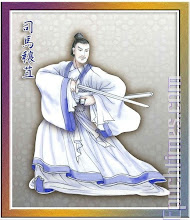
Sima Ranju stated that loving the enemy will bring unity stronger. If a general express love and concern not only to his own soldiers but also the enemy's side, they will submit to him. Use the hearts rather than violence.

In the Three Kingdom Era, where Zhuge Liang have a Southern Expedition against the Nanman King Meng Huo. Ma Su, his advisor suggested the quotation and Zhuge Liang was impressed. Zhuge Liang did not kill the enemy, he release them for them to reunite with their families and gave them food supply. The Nanman soldiers and the citizens was touched by his actions and felt that Meng Huo's battle was meaningless, therefore they are unwilling to fight against their benefactor. Zhuge Liang captured Meng Huo but did not execute him, instead he released him for seven times. Meng Huo was so embarrassed with his acts and failures and soon surrender. But Zhuge Liang trust Meng Huo and let him continue the role of Nanman King. Meng Huo was touched by him and soon the Southern Nanman was stabilized.

This is the meaning of 攻城为下,攻心为上。心战为上,兵战为下.


Monday, January 5, 2009

Quotations of the Wise

"夫君子之行:静以修身,俭以养德;非淡泊无以明志,非宁静无以致远。" - 诸葛亮

One should seek serenity to cultivate the body, thriftiness to cultivate the morals. Seeking fame and wealth will not lead to noble ideal. Only by seeking serenity will one reach far. -
Zhugeliang

二人同心,其利断金。
If two people are of the same mind, their sharpness can cut through metal. Confucius

天时不如地利,地利不如人和。
Opportunities vouchsafed by Heaven are less important than terrestrial advantages, which in turn are less important than the unity among people. Mencius


Tuesday, November 25, 2008

Arrangement of the Army

In ancient wars in China, formations are formed in order to strengthen the soldiers. There are many types of soldiers to consider, different soldiers have different kinds of skills and weapon.

Types:
  • Horsemen - for attacking, penetrating
  • Footmen - a normal component of an army,
  • Archers -long range attack
  • Spearmen - long ranged attack, hold spear, axe or long weapon
  • Defender - Hold large shield
  • Elite troop - Highly trained troops
  • Siege army - Siege machine, ladder, dashing troops
  • Chariots - Transporter, Wagons, Assault
  • Incendiary - Fire assault, cannon, fire material
Now we know the different types of soldiers to be consider, so how do we place them in order to get a solid formation.

The arrangement are (by number of layers)
  1. Defender - shield for protection from the enemy's dashing attack and arrows
  2. Spearmen - defend the halberd troop behind
  3. Halberd - support the spearmen
  4. Archer - long ranged attack
  5. Horsemen - dashing attack
  6. Chariot, Wagon and Assault Vehicles - Total Assault, attack the weakened enemy force
  7. Other forces - elite force, extra troops for support, reinforcements
Using the seven layers of soldier to form a formation.
  • Attacking force - Horsemen as first line, create a wedge formation and dashing attack
  • Defensing force - Defender as first line, large shield, solid in formation
  • Invading fortress force - Assault force, Defenders protect the front line, Siege machines at the front, back and center layers of the formation. Archers at the back to attack the fortress guards.

Friday, October 31, 2008

What is the Tao of military?

The Tao is about benevolence towards people. Tao of warfare is about deception, so what is the Tao of military or in the modern case organizations?

When King Wu asked Jiang Ziya (Tai Gong): "What is the Tao of the military?"

Jiang Ziya said, "In general, as for the Tao of military, nothing surpasses unity."

Unity is the most important factor in the military. If there is unity, soldiers will stick together like brother. One taking care of the other, fight for each other and die together with honor. Unity is teamwork, therefore when orders are passed down, everyone is clear about the instructions. Disunity corrupt the whole military operation, bringing chaos and miscalculation. Therefore even if a general have the best winning strategies in the world, he will still lose because of the disunity among the army.

In Sun Tzu's Art of War, one of the six values of a general is trustworthy. Only with trustworthy, the soldiers will listen the orders of the generals and die for him.

In Zhuge Liang's Jiang Yuan, it stated that general should not be arrogant for they will become discourteous and people will rebel against him/her. A general should not be stingy for he/she will not reward the trustworthy and the soldiers will not be dedicated. Therefore strict instructions are given and discipline must be observed within the army. Make sure that rewards and punishments are clear so that the soldiers will trust the general and die fighting for him.

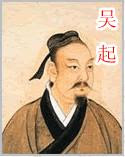
A wise general will show concern to the soldiers, he will treat them as brothers. Wu Qi, a famous winning strategist, emphasized on the unity of the army. When Wu Qi discovered that one of his soldiers is suffering from a painful boil, he went to the soldier and use his mouth to suck out the boil. The soldiers was shocked and touched by Wu Qi's actions and swear loyalty to him, when the whole army know about it, the morale of the army increased.

In modern day, organizations requires teamwork, therefore friendship counts. Friendship brings people closer to one another, this is unity. Therefore when chaos reigns or a problem appears, they will work together to solve the problem, they will never be apart from each other.

What is Tao?

Many people believed that Tao is Taoism. Tao is related to Taoism but it is not Taoism. Tao is also known as the path or way. In a life of a person, that are many tao waiting for him to walk, but he will choose the path he is willing to take. Either bad or good. In Japanese martial arts, title ended with the Japaneses' name DO which means Tao.

In Sun Tzu's Art of War, the first factor among the five factors was Tao. In this case, Tao refers to the agreement between the Sovereign and his people. In order for the sovereign to win the hearts of the people, he must go with the agreement of the people.

In the Three Strategy of Yellowstone Elder, the superior strategy stated that if the general or sovereign has the same likes as the masses, there is nothing he will not accomplish.

In Sima's Rules of War, Sima Ranju said that the Tao is about benevolence. "Neither contravening the seasons nor working the people to exhaustion, neither attacking a state in national mourning nor taking advantage of natural disaster, or not mobilize the army in either winter or summer, this is the mean of loving the people, both yours and your enemy's."

While in another different case, Sun Tzu's Art of War stated that the Tao of Warfare is about deception, this is stated in the first chapter of Sun Tzu's Art of War.

Therefore, there are many different types of Tao, all are not meant to be the same. For Lao Tzu said, "Tao is not real Tao, a name may not be the real name." Therefore, a path may not be the real path to victory. Good path may turn to bad path, things in the world will change over times, thus people does not use a single path to be successful, there maybe shortcuts or even long and difficult path. For "A thousand journeys beginning with one step."

Sunday, October 19, 2008

Fight or not to Fight


The Art of War is also known as the Art of Peace. As stated in every art of war, the best strategy is to win without any fighting, thus no bloodshed and death will be involved. A wise general or sovereign must not think about winning or domination, he/she must have Tao. Tao, also known as the Path, have been emphasized in the first chapter of Sun Tzu's Art of War. To be successful, the sovereign must have the support of the people. With a strong support from the people, a united army can be produced.

How to win over the hearts of people?
  • Go with the interest of the people, not against
  • Government must be observant
  • Do not go to war due to self anger or frustration
  • The sovereign must practice virtue and wisdom
  • He must not take people's expenses to satisfy his personal desire
  • He must not resort to violence and torturing
With a wise and generous ruler, the country will become prosperous. People will follow him for he make decisions that benefits the people, he goes to war only in the interest of the whole state. Therefore, a ruler should not wage war to satisfy oneself or due to anger and frustration. For Sun Tzu said: Anger or sadness can turn into happiness and delight easily, but a perished state cannot be revived and the dead cannot be brought back to life. For example, during the Three Kingdom Era, when Guan Yu was executed by Sun Quan, Shu Emperor Liu Bei lead thousands of troops to attack the state of Wu in order to avenge his sworn-brother. He did not listen to his advisor's advices and in the end, he was defeated by Wu strategist Lu Xun. A Kingdom or nation must have an observant and perceptive government. It will look at subtle phenomena and listens to small voices. The Sovereign must rid all evil and arrogant and seek the wise. He must make good use of people's talents, and treat everyone equally. Uphold justice and punish the unjust.

"The world is not the private possession of the ruler but the common property of all. He who shares the benefits of the world gains the world, he who tries to grab the benefits of the world all for himself is certain to lose the world."

Sunday, October 12, 2008

Dealing with an Enemy in Battlefield

When dealing with an enemy, firstly know your enemy and yourself. Next, compare them to your army. Do not underestimate an enemy when it is weak.

Before the war starts, always get to the battlefield before the enemy in order to seize an advantageous position. If your enemy got the advantageous position, do not attack and withdraw from the battlefield. There are many ways to win a battle according to the amount of your army:

  1. If your army outnumber the enemy, surround them and attack
  2. If your army is five times of the enemy, attack them directly
  3. If your army is double the size of the enemy, divided them into two and attack enemy from the front and back.
  4. If your army is equal to the enemy, challenges them and ploy strategy to defeat them
  5. If the enemy outnumber your army, withdraw from battle

In the 1st chapter of Sun Tzu’s Art of War, it stated: when facing the enemy, pretend to be weak and inactive, pretend to be far when the target is near. When your target is far away, pretend to attack a nearby place. With this, the enemy will think that you are weak and will lower his/her army security.

These are some basic way of dealing with the enemy.

Wednesday, October 8, 2008

Know Yourself and your Enemy!!!


In the third chapter of Sun Tzu, it stated:

知彼知己,百戰不殆;不知彼而知己,一勝一負;不知彼,不知己,每戰必敗


The statements above were the most famous quotes of all times, for it was used not only in war, but only competition and businesses. So what it means?


· To know yourself and your enemy and you can win a hundred battles without defeat.
· But if you know yourself and not your enemy, then you can win a battle and lose another
· If you know neither yourself nor your enemy, then you will simply be defeated


This is a basic knowledge for generals in Ancient China. To know yourself, identify your strength and weakness. To know the enemy, usage of spies and scout mostly and essentially needed. One must learn from the previous battle through reconnaissance.


Find the strengths and weaknesses of both you and your enemy and compare them. So who have more strength or weakness? If the enemy is very strong, then avoid any battle. If the chances of winning are high for you, then continue and defeat the enemy.


In battle, when dealing with the enemies, identify the enemy’s formation and find the strength and weakness. If the formation is complex and extraordinary, then avoid battle. If the enemy’s morale is high, avoid fighting with them. If there is a flaw in the enemy’s arrangement, then attack them to break their formation. Even though a general knows the enemy very well, he/she must never underestimate a weak enemy or lower his/her guard down.


Knowing your enemy also means knowing the names of the enemy’s generals. In the Battle of the Red Cliff, Zhou Yu knew that Cai Mao and Zhang Yun have just surrendered to Cao Cao, therefore he wrote a fake letter talking about the secret alliance with Cai Mao and Zhou Yu. When Cao Cao found it, he immediately executes the two generals. The strategy was known as “Kill with a borrowed knife”

Monday, September 29, 2008

Training of An Army


In order to lay out strategies and do the different function of military operation, soldiers are needed. To form an army or a formation, skilled soldiers are needed. To find fine and powerful soldiers, highly-skilled soldiers are needed. In ancient war, soldiers are needed to defense their loved ones and their nation. Before soldiers were the people, normal people with hidden talents.

Confucius since said: to send people to war without teaching them is abandoning. Therefore, soldiers must be skilled in fighting and armed with weapons. The important and main factor of a powerful army is Unity. With unity, the soldiers will stay together as one even in time of chaos. In Wu Tzu’s Art of War, it stated the unity between soldiers and generals.


There are five main factor of getting a great army; formation, strength, morale, speed and weaponry.

  • · Formation - Neatness in arrangement, orthodox and unorthodox
  • · Strength - large amount, discipline, strictness, types of troops
  • · Morale - eagerness
  • · Speed - fast
  • · Weaponry - spear, sword, axe, arrow/ siege

In Zhuge Liang’s 將苑, there are ways of training an army:


1. Train them in conduct and duty
2. Teach them to be loyal and trustworthy
3.
Instruct them in military rules and penalties

4.
Awe them with rewards and punishments

5.
Only when the above all are done, then train them in maneuvers and formation

With this, one person can teach 10 people, 10 people can teach 100, 100 people can teach 1000and soon developed into armed forces. Observe their performance and use them according to their talents, give them weapons to protect themselves from danger.


Next, we refer to the Questions and Replies between Emperor Tang Taizong and General Li Jing on the training of arrangement and formations. In 唐李問對, training of soldiers should start from the lowest to the highest level.

  • · Firstly, divide the soldiers into small fighting squad
  • · Secondly, organize them into platoons
  • · Thirdly, form them into battalions
  • · Lastly, put them together to form different army formation

Training in this order will make the formation stronger. Even though the strong formation is broken, the army will broke down into battalions and platoons, forming a new and neat formation.


Lastly, Endurance and Consistency is needed to maintain the strength of the army. The soldiers should continue their strict training and not let down their guards, even though they gain big victory. Discipline must be upheld and military rules must not be lightened. Rewards and punishment should be given accordingly. If rewards and punishments are not given accordingly, the soldiers will not trust the general. If discipline is not observed, then the soldiers will lax. If the soldiers do not undergo strict and consistent training, they are unprepared for war.

Thursday, September 25, 2008

The Incendiary Attack

When we say about fire attack, we will most likely remember the Battle of the Red Cliff; how Zhuge Liang and Zhou Yu use fire attack to defeat Cao Cao’s numerous navy fleets. Fire attack in Ancient China history was used during night raids or surprise attack. In fire tactic, instructions to the army or troop must be clear. If there is a small mistake, the plan may backfire and the enemy will have the advantage.

孙子曰:
凡火攻有五:一曰火人,二曰火积,三曰火辎,四曰火库,五曰火队。
行火必有因,因必素具。发火有时,起火有日。时者,天之燥也。日者,月在
箕、壁、翼、轸也。凡此四宿者,风起之日也。凡火攻,必因五火之变而应之:火
发于内,则早应之于外;火发而其兵静者,待而勿攻,极其火力,可从而从之,不
可从则上。火可发于外,无待于内,以时发之,火发上风,无攻下风,昼风久,夜风止。凡军必知五火之变,以数守之。

Sun Tzu stated that there are five main target of using a fire attack; soldiers, stores and supply, equipments, carts and chariots, and army formation. Burning the soldiers will decrease the strength of the army, burning the supplies will decrease the energy of the army, burning the equipments will make the enemy unarmed. Burning carts and chariot, the enemy will not have transportation for supply and stores, therefore the speed of the enemy decreases. Lastly, using incendiary attack will break the enemy’s army formation, therefore they will not in order.


There are several ways to ensure a successful fire tactic:


Firstly, make sure the equipments to start a fire must be adequate.


Secondly, if the wind is blowing towards the target, then the fire tactic will be successful. Therefore when the moon is in the constellation of 箕、壁、翼、轸, then that are the days of which the wind will raise.


Thirdly, the season and weather condition affect the progress of the fire tactic. Dry season and weather condition is favorable for a fire attack. If the weather is raining, then fire attack will be in vain.


Lastly, the assistance of the army is important as the fire tactic may only weaken the enemy. If the fire occurs inside the enemy, then attack at once, for the fire will make the enemy’s soldiers panic and dispersed in chaos. But if the enemy is calm during the outbreak of fire, then do not attack and wait for the opportunity. When moving the troop during the fire attack, do not order the troop to move against the direction of the wind or the spreading of the fire; follow the direction of the fire.


The Battle of the Red Cliff (208) was the war against the combined force of Liu and Sun (Dongwu) against the warlord Cao Cao. So how did they defeat the Cao navy troop in the battle?

反間計 - Firstly, the Wu commanding general Zhou Yu decided to write a fake letter about Cao's navy admiral Cai Mao and Zhang Yun allied with him. This made Cao Cao executed the two generals mistakingly.

苦肉計 - Zhou Yu and the old general Huang Gai decided to plot the beating trick. By beating Huang Gai, Cao's spy revealed the situation to Cao Cao. Huang Gai wrote a fake surrender letter and order his advisor Kan Ze to sent it to Cao Cao.

無中生有 - Zhuge Liang and Lu Su mobilize straw boat to Cao Cao's naval shipyard. This made Cao Cao use archer to defend the naval base. This made Zhuge Liang collect more than 10,000 arrows.


連環計 - Pang Tong went to Cao Cao's base and advise him to chain all his ship together to ease the sea-sickness of the soldiers. But his intention is to trap the ship together so that Zhou Yu's fire attack will spread.

大 火計 - Huang Gai send speedboats to pretend to surrender to Cao Cao. Upon reaching the naval shipyard, Huang Gai ordered all boats to be set on fire and collide to Cao Cao's chained ships. Soon, Cao Cao's thousands ships were all burnt down.

Tuesday, September 23, 2008

Preparation for War


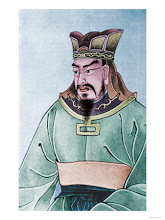
Sun Tzu, also known as Sun Wu, was a legendary figure in ancient China history. He was known as the Sage of War. He was heroic general during the Spring and Autumn Period (722 - 481BC) under the King of Wu. He was also the author of the commonly and famous military treatise known as 孫子兵法. The treatise was the basic instruction of a successful military operation and was spread around the war. It was said that Sun Tzu executed two concubines of the King of Wu for not taking instructions seriously, despite how King of Wu protested.

In Sun Tzu’s Art of War, there consisted of 13 chapters. The first chapter is the most essential for victory in military conflict. It stated:


孙子曰:
兵者,国之大事,死生之地,存亡之道,不可不察也。故经之以五事,校之以计,而索其情:一曰道,二曰天,三曰地,四曰将,五曰法。

In my own words, as a general or a soldier, armed conflict impact the country largely, therefore in a battlefield, life and death is observed and fighting is the only way to survive. Thus, the art of war must be studied carefully.

• 道者,令民于上同意,可与之死,可与之生,而不危也 • 天者,阴阳、寒暑、时制也 • 地者,远近、险易、广狭、死生也 • 将者,智、信、仁、勇、严也 • 法者,曲制、官道、主用也。凡此五者,将莫不闻,知之者胜,不知之者不胜。

Tao, the path - Go with the people’s hearts, so that they will stay at your side in the matter of life and death. Against the people’s hearts, there will be rebellion

Heaven - know the weather condition, observe the star, and know the yin-yang concept

Earth - knows how far or near, knows the features of different terrain


General - Knowledge, Trustworthy, Virtue, Courage and Discipline


Military operation/ tactics - the methods of military operation and the roles and function

Why was Zhuge Liang so success?


When people see in the history of the Three Kingdom Era, the most recognized man is the famous strategist Zhuge Liang. Zhuge Liang, also known as Master Sleeping Dragon, was an accomplished strategist. In my childhood, I often heard after the story of the man sitting playing a zither on the castle, the Empty Fort Strategy. Then ask yourself why is he so success in everything he did?

In his treatise, Jiang Yuan
將苑 , the Way of a General stated:
上知天文,中察人事,下识地理, 四海之内,枧如室家,此天下之将.

One who knows the movement of the planets and the position of the star, who study the stars constellation and the celestial process of creation, who know the affair of human and the features of the earth, who is able to know the weather condition and the advantages of the earthly, is a talent beyond extraordinary.
Examples:

Empty Fort Strategy
Zhuge Liang's Empty Fort Strategy, according to some studies, may not be due to logic. For Zhuge Liang to use this risky strategy, was that he knew what was his rival, Sima Yi thinking. Sima Yi knew that Zhuge Liang did not use risky strategy, and upon seeing the castle gates opened and the dirt rising up, he expected huge ambushes behind the castle walls. Upon hearing the clear and peaceful music of the zither, Sima Yi believed that the peace and undisturbed music showed that Zhuge Liang is fully prepared.

Borrowing of 10,000 arrows
Zhuge Liang, before the Battle of Red Cliff, promised Zhou Yu to get 10,000 arrows in three days. How did he achieve that? Common sense, to do this is to do at night, where the straw boats cannot be seen clearly. But what's so special about his plan of borrowing arrows? Zhuge Liang knew that on the third day, there will be fog. When Cao Cao seen the situation, he believed that fog means ambushes and other reason, therefore he order not to send out the navy fleets to attack and use archers to get rid of the enemy, thus making Zhuge Liang's plan more effective.

Burning of Bowangpo Slope
After Liu Bei recruited Zhuge Liang as strategist, XiaHou Dun of Wei came to attack Liu Bei, passing by Bowangpo. Zhuge Liang use the terrain of Bowangpo as advantage to defeat the Wei troops. He lured the enemy troops into the narrow slope of Bowangpo and use a fire tactic to win Xiahou Dun's thousand troops

ShoutMix chat widget