Tuesday, November 25, 2008

Arrangement of the Army

In ancient wars in China, formations are formed in order to strengthen the soldiers. There are many types of soldiers to consider, different soldiers have different kinds of skills and weapon.

Types:
  • Horsemen - for attacking, penetrating
  • Footmen - a normal component of an army,
  • Archers -long range attack
  • Spearmen - long ranged attack, hold spear, axe or long weapon
  • Defender - Hold large shield
  • Elite troop - Highly trained troops
  • Siege army - Siege machine, ladder, dashing troops
  • Chariots - Transporter, Wagons, Assault
  • Incendiary - Fire assault, cannon, fire material
Now we know the different types of soldiers to be consider, so how do we place them in order to get a solid formation.

The arrangement are (by number of layers)
  1. Defender - shield for protection from the enemy's dashing attack and arrows
  2. Spearmen - defend the halberd troop behind
  3. Halberd - support the spearmen
  4. Archer - long ranged attack
  5. Horsemen - dashing attack
  6. Chariot, Wagon and Assault Vehicles - Total Assault, attack the weakened enemy force
  7. Other forces - elite force, extra troops for support, reinforcements
Using the seven layers of soldier to form a formation.
  • Attacking force - Horsemen as first line, create a wedge formation and dashing attack
  • Defensing force - Defender as first line, large shield, solid in formation
  • Invading fortress force - Assault force, Defenders protect the front line, Siege machines at the front, back and center layers of the formation. Archers at the back to attack the fortress guards.

Friday, October 31, 2008

What is the Tao of military?

The Tao is about benevolence towards people. Tao of warfare is about deception, so what is the Tao of military or in the modern case organizations?

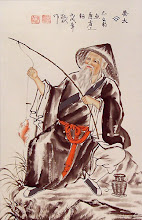
When King Wu asked Jiang Ziya (Tai Gong): "What is the Tao of the military?"

Jiang Ziya said, "In general, as for the Tao of military, nothing surpasses unity."

Unity is the most important factor in the military. If there is unity, soldiers will stick together like brother. One taking care of the other, fight for each other and die together with honor. Unity is teamwork, therefore when orders are passed down, everyone is clear about the instructions. Disunity corrupt the whole military operation, bringing chaos and miscalculation. Therefore even if a general have the best winning strategies in the world, he will still lose because of the disunity among the army.

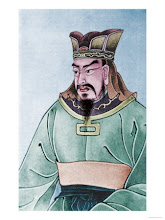
In Sun Tzu's Art of War, one of the six values of a general is trustworthy. Only with trustworthy, the soldiers will listen the orders of the generals and die for him.

In Zhuge Liang's Jiang Yuan, it stated that general should not be arrogant for they will become discourteous and people will rebel against him/her. A general should not be stingy for he/she will not reward the trustworthy and the soldiers will not be dedicated. Therefore strict instructions are given and discipline must be observed within the army. Make sure that rewards and punishments are clear so that the soldiers will trust the general and die fighting for him.

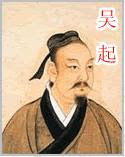
A wise general will show concern to the soldiers, he will treat them as brothers. Wu Qi, a famous winning strategist, emphasized on the unity of the army. When Wu Qi discovered that one of his soldiers is suffering from a painful boil, he went to the soldier and use his mouth to suck out the boil. The soldiers was shocked and touched by Wu Qi's actions and swear loyalty to him, when the whole army know about it, the morale of the army increased.

In modern day, organizations requires teamwork, therefore friendship counts. Friendship brings people closer to one another, this is unity. Therefore when chaos reigns or a problem appears, they will work together to solve the problem, they will never be apart from each other.

What is Tao?

Many people believed that Tao is Taoism. Tao is related to Taoism but it is not Taoism. Tao is also known as the path or way. In a life of a person, that are many tao waiting for him to walk, but he will choose the path he is willing to take. Either bad or good. In Japanese martial arts, title ended with the Japaneses' name DO which means Tao.

In Sun Tzu's Art of War, the first factor among the five factors was Tao. In this case, Tao refers to the agreement between the Sovereign and his people. In order for the sovereign to win the hearts of the people, he must go with the agreement of the people.

In the Three Strategy of Yellowstone Elder, the superior strategy stated that if the general or sovereign has the same likes as the masses, there is nothing he will not accomplish.

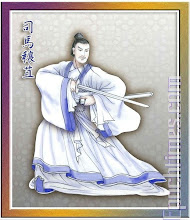
In Sima's Rules of War, Sima Ranju said that the Tao is about benevolence. "Neither contravening the seasons nor working the people to exhaustion, neither attacking a state in national mourning nor taking advantage of natural disaster, or not mobilize the army in either winter or summer, this is the mean of loving the people, both yours and your enemy's."

While in another different case, Sun Tzu's Art of War stated that the Tao of Warfare is about deception, this is stated in the first chapter of Sun Tzu's Art of War.

Therefore, there are many different types of Tao, all are not meant to be the same. For Lao Tzu said, "Tao is not real Tao, a name may not be the real name." Therefore, a path may not be the real path to victory. Good path may turn to bad path, things in the world will change over times, thus people does not use a single path to be successful, there maybe shortcuts or even long and difficult path. For "A thousand journeys beginning with one step."

Sunday, October 19, 2008

Fight or not to Fight


The Art of War is also known as the Art of Peace. As stated in every art of war, the best strategy is to win without any fighting, thus no bloodshed and death will be involved. A wise general or sovereign must not think about winning or domination, he/she must have Tao. Tao, also known as the Path, have been emphasized in the first chapter of Sun Tzu's Art of War. To be successful, the sovereign must have the support of the people. With a strong support from the people, a united army can be produced.

How to win over the hearts of people?
  • Go with the interest of the people, not against
  • Government must be observant
  • Do not go to war due to self anger or frustration
  • The sovereign must practice virtue and wisdom
  • He must not take people's expenses to satisfy his personal desire
  • He must not resort to violence and torturing
With a wise and generous ruler, the country will become prosperous. People will follow him for he make decisions that benefits the people, he goes to war only in the interest of the whole state. Therefore, a ruler should not wage war to satisfy oneself or due to anger and frustration. For Sun Tzu said: Anger or sadness can turn into happiness and delight easily, but a perished state cannot be revived and the dead cannot be brought back to life. For example, during the Three Kingdom Era, when Guan Yu was executed by Sun Quan, Shu Emperor Liu Bei lead thousands of troops to attack the state of Wu in order to avenge his sworn-brother. He did not listen to his advisor's advices and in the end, he was defeated by Wu strategist Lu Xun. A Kingdom or nation must have an observant and perceptive government. It will look at subtle phenomena and listens to small voices. The Sovereign must rid all evil and arrogant and seek the wise. He must make good use of people's talents, and treat everyone equally. Uphold justice and punish the unjust.

"The world is not the private possession of the ruler but the common property of all. He who shares the benefits of the world gains the world, he who tries to grab the benefits of the world all for himself is certain to lose the world."

Sunday, October 12, 2008

Dealing with an Enemy in Battlefield

When dealing with an enemy, firstly know your enemy and yourself. Next, compare them to your army. Do not underestimate an enemy when it is weak.

Before the war starts, always get to the battlefield before the enemy in order to seize an advantageous position. If your enemy got the advantageous position, do not attack and withdraw from the battlefield. There are many ways to win a battle according to the amount of your army:

  1. If your army outnumber the enemy, surround them and attack
  2. If your army is five times of the enemy, attack them directly
  3. If your army is double the size of the enemy, divided them into two and attack enemy from the front and back.
  4. If your army is equal to the enemy, challenges them and ploy strategy to defeat them
  5. If the enemy outnumber your army, withdraw from battle

In the 1st chapter of Sun Tzu’s Art of War, it stated: when facing the enemy, pretend to be weak and inactive, pretend to be far when the target is near. When your target is far away, pretend to attack a nearby place. With this, the enemy will think that you are weak and will lower his/her army security.

These are some basic way of dealing with the enemy.

Wednesday, October 8, 2008

Know Yourself and your Enemy!!!


In the third chapter of Sun Tzu, it stated:

知彼知己,百戰不殆;不知彼而知己,一勝一負;不知彼,不知己,每戰必敗


The statements above were the most famous quotes of all times, for it was used not only in war, but only competition and businesses. So what it means?


· To know yourself and your enemy and you can win a hundred battles without defeat.
· But if you know yourself and not your enemy, then you can win a battle and lose another
· If you know neither yourself nor your enemy, then you will simply be defeated


This is a basic knowledge for generals in Ancient China. To know yourself, identify your strength and weakness. To know the enemy, usage of spies and scout mostly and essentially needed. One must learn from the previous battle through reconnaissance.


Find the strengths and weaknesses of both you and your enemy and compare them. So who have more strength or weakness? If the enemy is very strong, then avoid any battle. If the chances of winning are high for you, then continue and defeat the enemy.


In battle, when dealing with the enemies, identify the enemy’s formation and find the strength and weakness. If the formation is complex and extraordinary, then avoid battle. If the enemy’s morale is high, avoid fighting with them. If there is a flaw in the enemy’s arrangement, then attack them to break their formation. Even though a general knows the enemy very well, he/she must never underestimate a weak enemy or lower his/her guard down.


Knowing your enemy also means knowing the names of the enemy’s generals. In the Battle of the Red Cliff, Zhou Yu knew that Cai Mao and Zhang Yun have just surrendered to Cao Cao, therefore he wrote a fake letter talking about the secret alliance with Cai Mao and Zhou Yu. When Cao Cao found it, he immediately executes the two generals. The strategy was known as “Kill with a borrowed knife”

Monday, September 29, 2008

Training of An Army


In order to lay out strategies and do the different function of military operation, soldiers are needed. To form an army or a formation, skilled soldiers are needed. To find fine and powerful soldiers, highly-skilled soldiers are needed. In ancient war, soldiers are needed to defense their loved ones and their nation. Before soldiers were the people, normal people with hidden talents.

Confucius since said: to send people to war without teaching them is abandoning. Therefore, soldiers must be skilled in fighting and armed with weapons. The important and main factor of a powerful army is Unity. With unity, the soldiers will stay together as one even in time of chaos. In Wu Tzu’s Art of War, it stated the unity between soldiers and generals.


There are five main factor of getting a great army; formation, strength, morale, speed and weaponry.

  • · Formation - Neatness in arrangement, orthodox and unorthodox
  • · Strength - large amount, discipline, strictness, types of troops
  • · Morale - eagerness
  • · Speed - fast
  • · Weaponry - spear, sword, axe, arrow/ siege

In Zhuge Liang’s , there are ways of training an army:


1. Train them in conduct and duty
2. Teach them to be loyal and trustworthy
3.
Instruct them in military rules and penalties

4.
Awe them with rewards and punishments

5.
Only when the above all are done, then train them in maneuvers and formation

With this, one person can teach 10 people, 10 people can teach 100, 100 people can teach 1000and soon developed into armed forces. Observe their performance and use them according to their talents, give them weapons to protect themselves from danger.


Next, we refer to the Questions and Replies between Emperor Tang Taizong and General Li Jing on the training of arrangement and formations. In 唐李問對, training of soldiers should start from the lowest to the highest level.

  • · Firstly, divide the soldiers into small fighting squad
  • · Secondly, organize them into platoons
  • · Thirdly, form them into battalions
  • · Lastly, put them together to form different army formation

Training in this order will make the formation stronger. Even though the strong formation is broken, the army will broke down into battalions and platoons, forming a new and neat formation.


Lastly, Endurance and Consistency is needed to maintain the strength of the army. The soldiers should continue their strict training and not let down their guards, even though they gain big victory. Discipline must be upheld and military rules must not be lightened. Rewards and punishment should be given accordingly. If rewards and punishments are not given accordingly, the soldiers will not trust the general. If discipline is not observed, then the soldiers will lax. If the soldiers do not undergo strict and consistent training, they are unprepared for war.


ShoutMix chat widget